Founder
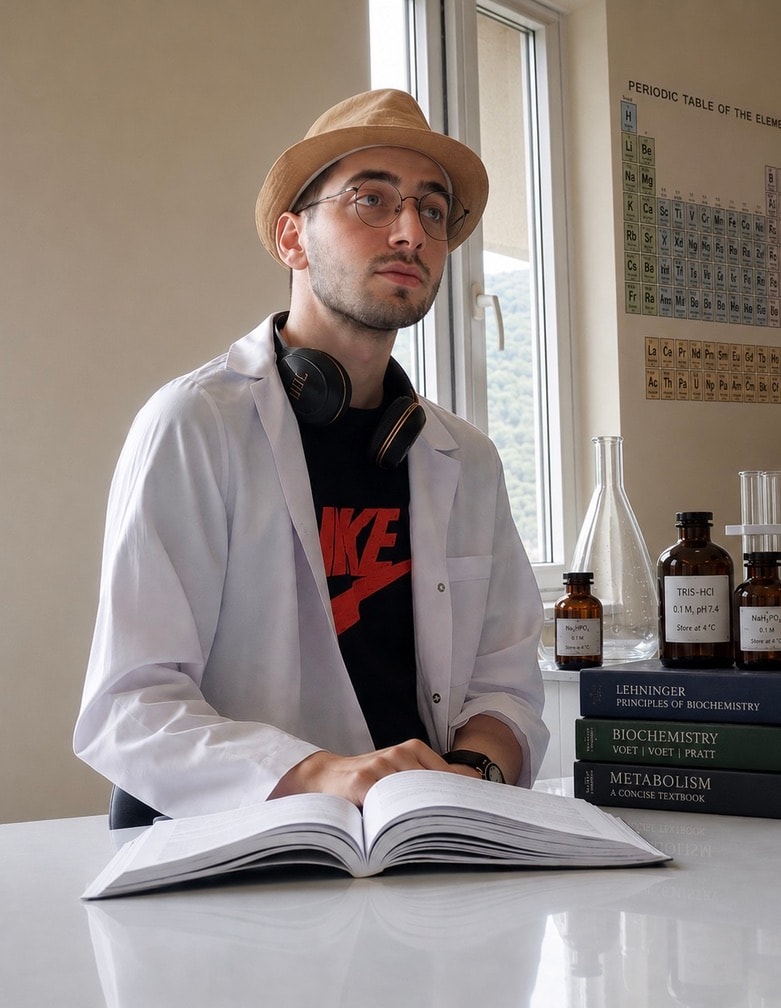
Saba Saitidze
Founder and Director of HOMEOSTASIS Academy
- Master's student, Berlin International University of Applied Sciences
- Educator in natural and life sciences
- Researcher in molecular oncology and cellular signalling
Founder
About
Saba Saitidze is the founder and director of HOMEOSTASIS Academy, with ten years of experience teaching natural and life sciences. Their academic interests combine molecular biology, biochemistry, cell biology, genetics, structural biology and experimental oncology.
The central direction of their scientific interests is the molecular basis of the origin, progression and therapeutic resistance of malignant tumours, especially structural and functional changes in oncogenic proteins, the dysregulation of intracellular signalling networks, and the metabolic and epigenetic adaptation of tumour cells.
Scientific and research interests
- The KRAS oncoprotein
- RAS–RAF–MEK–ERK
- PI3K–AKT–mTOR
- Structural biology
- Molecular pharmacology
- Tumour suppressors
- Cancer epigenetics
- Cancer metabolism
- Apoptosis and ferroptosis
- Tumour microenvironment
- Therapeutic resistance
- Multi-omics analysis
Scientific and research interests
KRAS, signalling and structure
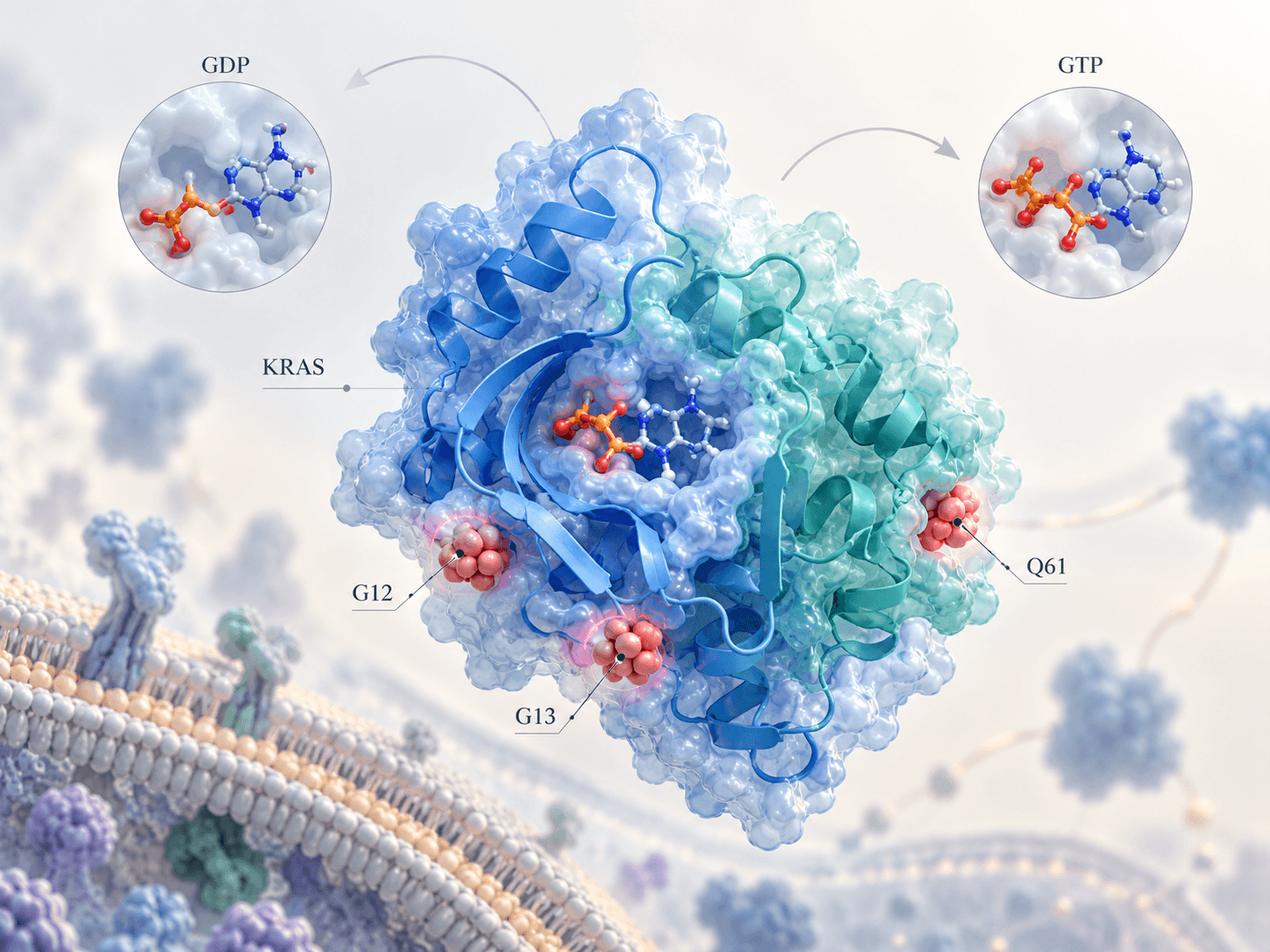
Molecular biology of the KRAS oncoprotein and oncogenic signalling
One of the main directions of scientific interest is the molecular regulation of the small GTPases of the RAS family, in particular the KRAS protein, and the functional characteristics of its oncogenic variants.
Particular attention is paid to the GDP/GTP-dependent activation–inactivation cycle of KRAS, the action of the regulatory GEF and GAP proteins, nucleotide exchange catalysed by SOS1, the GTPase-stimulating function of NF1, and the conformational dynamics of the Switch I and Switch II regions of KRAS.
The oncogenic variants of KRAS are of interest, including G12C, G12D, G12V, G12R, G13D and Q61H, and their effects on GTP hydrolysis, on interaction with effector proteins and on the activation of downstream signalling pathways.
The research interests include:
- the molecular mechanisms of activation and feedback regulation of the RAS–RAF–MEK–ERK (MAPK) signalling cascade;
- the role of the PI3K–AKT–mTOR pathway in cell growth, protein synthesis and metabolic homeostasis;
- the membrane localisation of KRAS, farnesylation and the formation of nanoclusters;
- RAF dimerisation, ERK reactivation and the spatiotemporal organisation of oncogenic signalling;
- the importance of SHP2/PTPN11, SOS1 and EGFR-dependent signalling in the adaptation of KRAS-mutant tumours.
Of special interest is how the substitution of a single amino acid in KRAS transforms the biochemical properties of the protein, and how these changes can be used to develop allele-specific targeted therapy.
Structural biology and molecular pharmacology of oncoproteins
The second important direction is the study of the three-dimensional structure of cancer-associated proteins, their conformational changes and their interactions with ligands.
Scientific interests include the analysis of the relationship between protein structure and function, the mechanisms of allosteric regulation, the energetic basis of protein–protein interactions, and the influence of post-translational modifications on oncogenic activity.
Particular attention is paid to the molecular basis of the action of covalent KRAS G12C inhibitors, including sotorasib and adagrasib, strategies for the non-covalent inhibition of KRAS G12D, and new therapeutic approaches directed at the RAS(ON) state.
The field of interest also includes targeted protein degradation technologies, including PROTAC systems, the use of molecular glues and the modulation of the ubiquitin–proteasome system.
Scientific and research interests
Genome, epigenome, metabolism and cell death

Tumour suppressors, genomic instability and the cell cycle
Another direction of research interest is the role of the disruption of cell-cycle control and of genomic instability in malignant transformation.
Particular attention is paid to the functions of the genes TP53/p53, RB1, PTEN, APC, BRCA1 and BRCA2 and of their protein products.
The main topics of interest are:
- the transcriptional activity of p53, MDM2-dependent regulation and the cellular programmes that respond to DNA damage;
- the ATM–ATR–CHK1/CHK2 signalling pathways and the cell-cycle checkpoints;
- homologous recombination, non-homologous end joining (NHEJ) and defects in DNA repair;
- replication stress, chromosomal instability and telomere dysfunction;
- the use of synthetic lethality to identify the selective vulnerability of tumour cells.
Cancer epigenetics and transcriptional reprogramming
Of significant scientific interest is how a tumour cell changes gene expression even without altering the primary nucleotide sequence of DNA.
In this direction particular attention is paid to DNA methylation, histone acetylation and methylation, chromatin remodelling, functional defects of the SWI/SNF complexes and the role of epigenetic enzymes in oncogenesis.
The field of interest includes DNMT, HDAC, EZH2 and the BET family proteins, as well as the participation of non-coding RNAs, microRNAs and long non-coding RNAs in the transcriptional regulation of tumour cells.
Cancer metabolism and mitochondrial bioenergetics
Saba's scientific interests extend to the metabolic reprogramming of tumour cells, with particular emphasis on the interrelationship between energy metabolism and oncogenic signalling.
The research topics are aerobic glycolysis and the Warburg effect, glutaminolysis, anaplerotic reactions of the tricarboxylic acid cycle, the pentose phosphate pathway, one-carbon metabolism and NADPH-dependent redox homeostasis.
Of special interest is the role of the regulatory systems HIF-1α, AMPK, mTORC1, MYC and NRF2 in metabolic adaptation, as well as the connection of mitochondrial reactive oxygen species, glutathione metabolism and lipid peroxidation with tumour progression.
Apoptosis, ferroptosis and the regulation of cell death
The research interests include the molecular mechanisms of programmed cell death and the biochemical processes whose disruption gives tumour cells a survival advantage.
Particular attention is paid to mitochondrial apoptosis, the anti-apoptotic and pro-apoptotic proteins of the BCL-2 family, BAX/BAK-dependent permeabilisation of the mitochondrial membrane, the release of cytochrome c and the activation of the caspase cascade.
An additional field of interest is the function of the GPX4–GSH system, SLC7A11-dependent cystine transport, iron-dependent lipid peroxidation and the therapeutic potential of ferroptosis against resistant tumours.
Scientific and research interests
The tumour ecosystem
The tumour microenvironment and molecular immuno-oncology
An important part of the scientific interests is the study of molecular interactions between tumour cells, the immune system and stromal components.
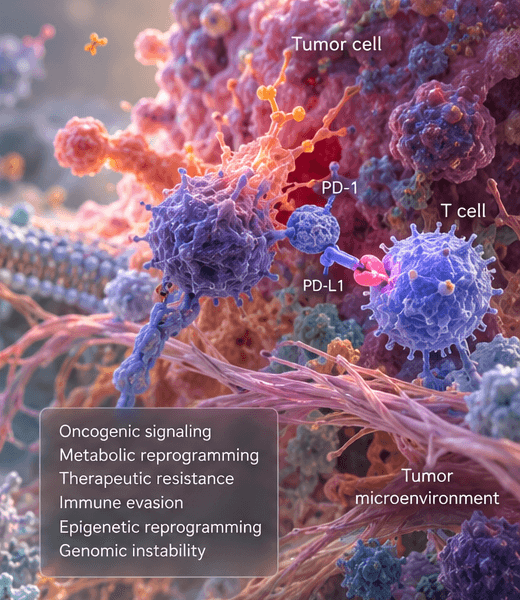
Particular attention is paid to the tumour microenvironment (TME), tumour-associated macrophages, cancer-associated fibroblasts, immunosuppressive myeloid cells and the functional regulation of cytotoxic T lymphocytes.
The field of interest includes the PD-1/PD-L1 and CTLA-4 immune checkpoint pathways, defects in antigen presentation, TGF-β-dependent immunosuppression, cytokine signalling and the modulation of the immune microenvironment of KRAS-dependent tumours.
Tumour heterogeneity, evolution and therapeutic resistance
Of particular scientific interest are the clonal evolution of malignant tumours, intratumoural heterogeneity and the selective processes generated by the effects of treatment.
Important topics in this direction are secondary oncogenic mutations, the activation of parallel signalling pathways, epithelial–mesenchymal transition (EMT), cellular plasticity and cellular states that are tolerant to drug exposure.
Particular attention is paid to the reactivation of MAPK signalling after KRAS inhibition, EGFR/MET-dependent bypass mechanisms, and the molecular basis of combining targeted therapy with immunotherapy.
Scientific and research interests
Multi-omics and personalised oncology
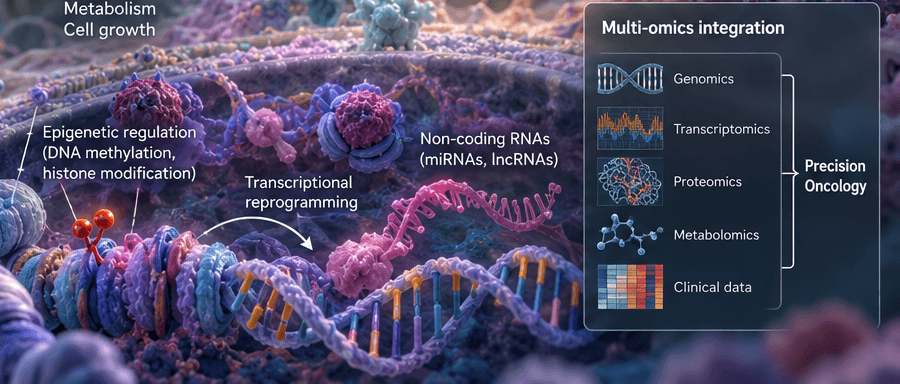
Multi-omics analysis and personalised oncology
Scientific interests also include integrated approaches of modern molecular biology and bioinformatics, among them:
- genomics and tumour mutational profiling;
- transcriptomics and single-cell RNA sequencing (scRNA-seq);
- proteomics and phosphoproteomics;
- metabolomics and the analysis of metabolic fluxes;
- spatial transcriptomics;
- liquid biopsy and the analysis of circulating tumour DNA (ctDNA).
The particular importance of these directions lies in studying the relationship between the molecular profile of a tumour, the activity of signalling networks and the response to treatment, which is the basis for the development of personalised medicine and biomarker-based therapeutic strategies.
Saba's long-term scientific interest is concentrated on an integrated understanding of the links between oncogenic mutations, the structural dynamics of proteins, cellular metabolism and therapeutic vulnerability, especially using the example of KRAS-dependent tumours.
Teaching
Academic and teaching activity
Over ten years of teaching experience, Saba has worked with learners and students at various academic levels, including those preparing for university admission and participants in international educational programmes.
The teaching areas include general, inorganic, organic and biological chemistry, molecular biology, genetics and biochemistry. Particular attention is paid to international educational standards, including the GCSE, A-Level and International Baccalaureate (IB) programmes.
The pedagogical approach is based on conceptual teaching: connecting chemical reactions, biological processes and molecular mechanisms with one another, so that the learner can not only absorb theoretical knowledge but also apply it independently.
Vision
The vision of HOMEOSTASIS Academy
HOMEOSTASIS Academy was created in the belief that quality scientific education must be at once academically rigorous, modern, interactive and accessible.
The academy's aim is to create an educational environment in which chemistry, biology and the life sciences are taught not as isolated disciplines but as interconnected systems, from molecular foundations to complex biological processes.
“Learning science begins when we stop memorising formulas and begin to see the mechanisms behind them.”
Illustrations on this page are AI-generated conceptual visualisations. They are not experimentally determined structures or validated molecular diagrams.
Browse the courses